Accurate, up-to-date terrain data is the foundation of engineering and mapping projects. The Digital Terrain Model (DTM) and the Digital Surface Model (DSM) represent the earth from two different perspectives. Understanding both and using them correctly directly determines the reliability of any analysis.
DTM — Digital Terrain Model
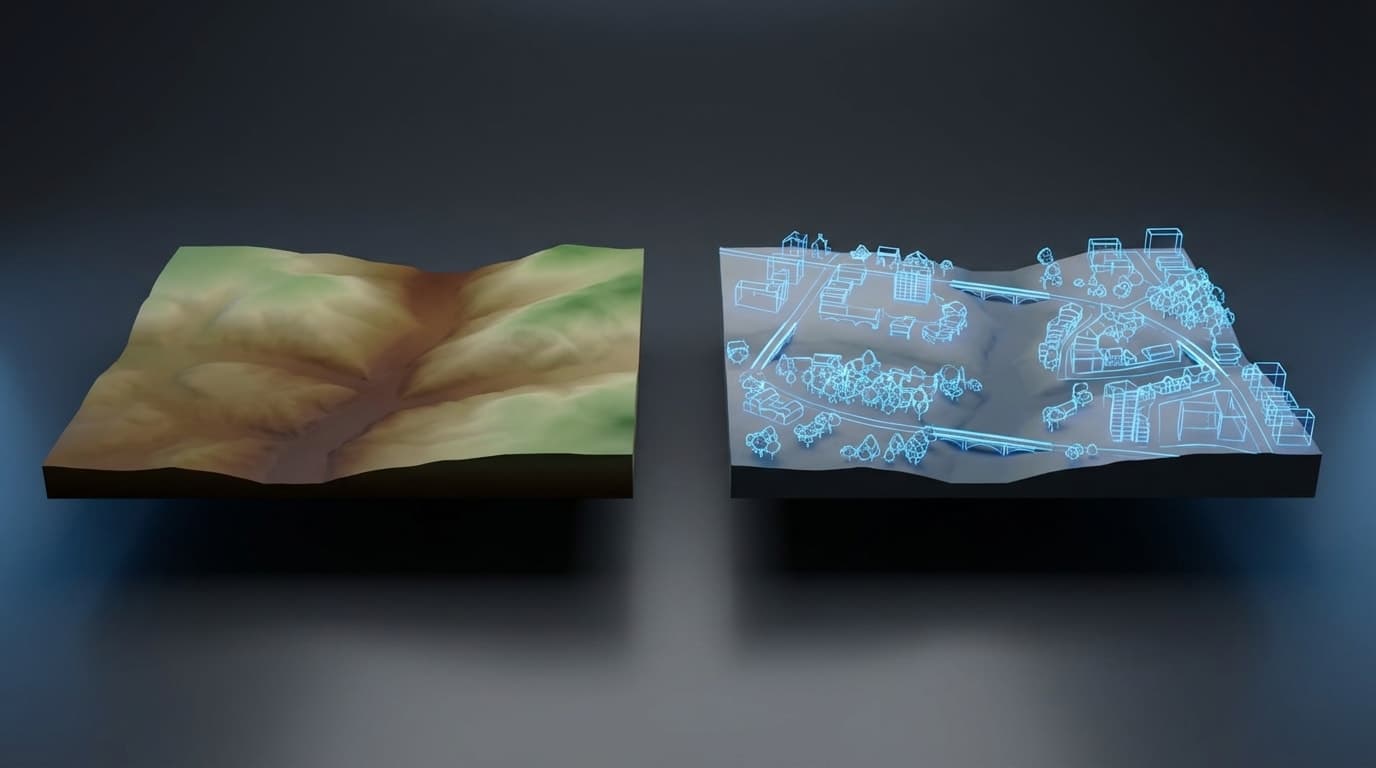
The Digital Terrain Model (DTM) is a 3D model of the bare-earth surface. Buildings, trees, bridges and other surface objects are removed — only natural topography remains. This makes the DTM indispensable for many engineering applications.
Common DTM use cases include:
- Road and rail projects: route studies, longitudinal and cross sections, cut-and-fill calculations
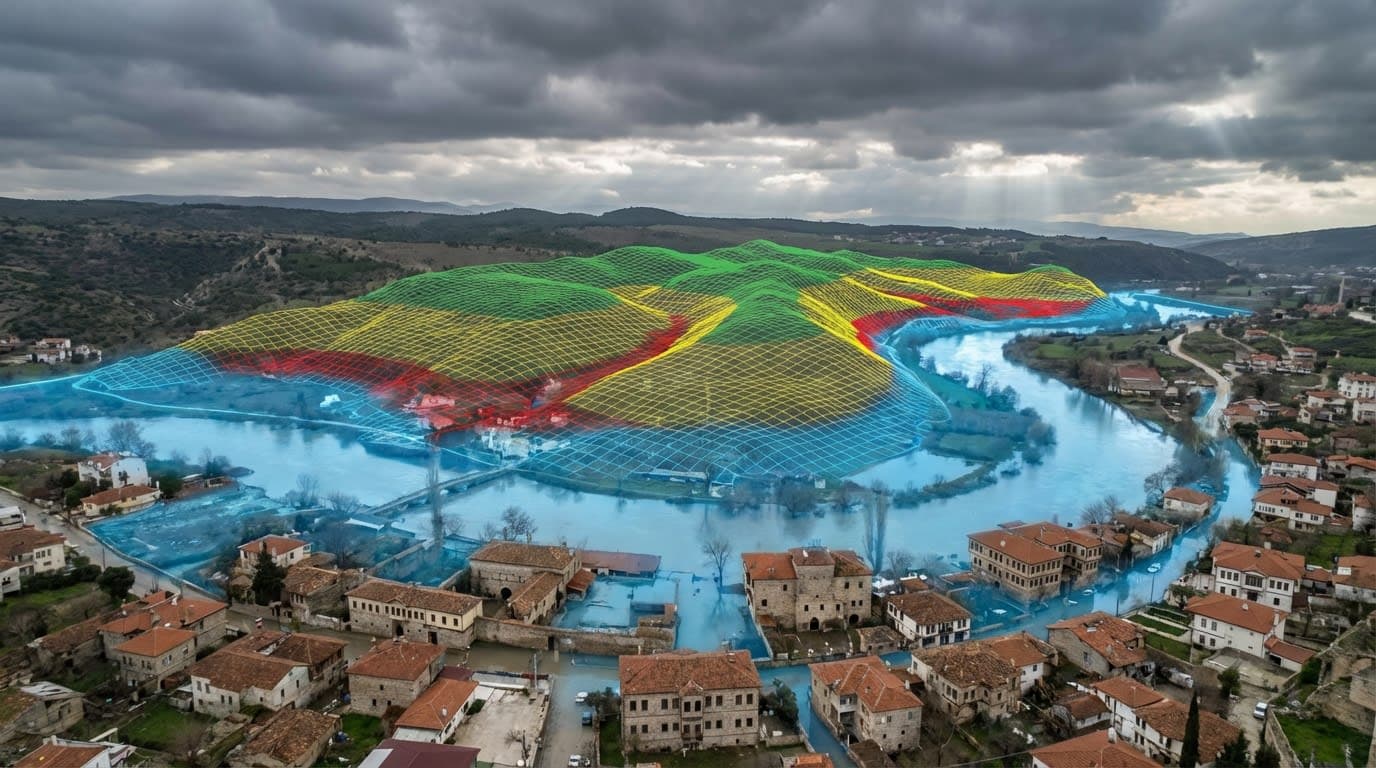
- Flood modeling: streambed geometry and flood propagation need the true ground surface
- Slope and aspect analysis: agricultural suitability, landslide susceptibility maps
- Agriculture: drainage planning and land leveling in precision agriculture
- Mining: open-pit volume calculations, slope stability assessment
DSM — Digital Surface Model
The Digital Surface Model (DSM) represents the topmost surface — including buildings, trees, powerlines and bridges. It captures the "bird's-eye" elevations of the terrain and its objects, supporting many engineering disciplines.
Common DSM use cases include:
- 3D city modeling: urban information systems, visualization and simulation
- Telecommunications: line-of-sight analysis for cell sites, signal propagation modeling
- Solar energy: shadow analysis for rooftop and ground-mounted PV projects
- Forestry: canopy closure, forest density mapping
- Aviation: obstacle maps, approach/departure corridor analysis
nDSM — Normalized Surface Model
The normalized Digital Surface Model (nDSM) is the difference between DSM and DTM: nDSM = DSM - DTM. This simple subtraction reveals the real heights of objects on the ground.
With an nDSM you can directly compute a building's story heights, a tree's height or the tip of an electric pole above ground. This feeds building inventories, forestry biomass estimation, 3D model generation for zoning, and clearance distance checks along energy corridors.
For example, in a municipal zoning plan, nDSM can be used to determine story heights of the existing building stock and automatically flag buildings out of zoning compliance.
Why LiDAR is the Best Source
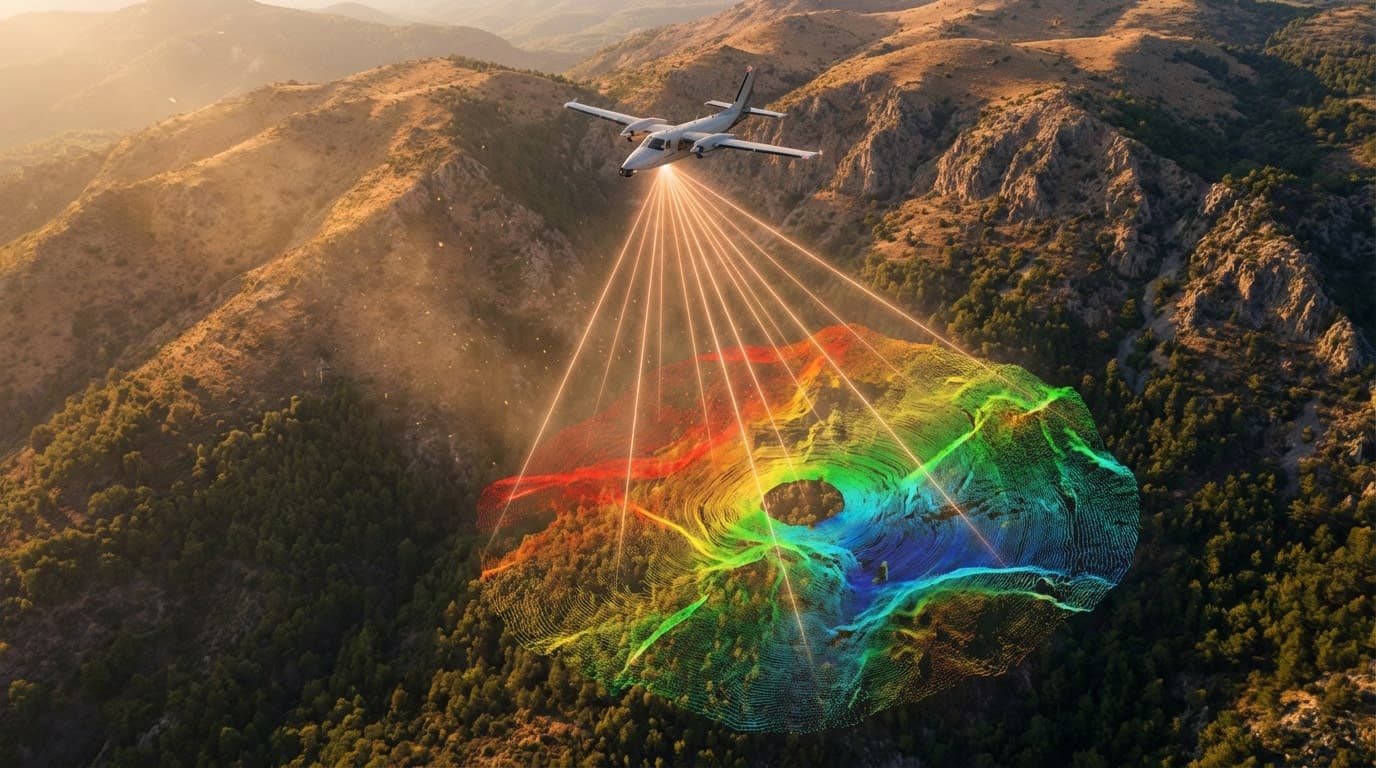
Aerial LiDAR provides the most accurate input for DTM and DSM generation. Its advantages are clear:
- Vegetation penetration: laser pulses pass through the canopy to reach the ground. Accurate DTMs are possible even in forested areas — something photogrammetry physically cannot do.
- Dense point clouds: with dozens of points per square meter, both DTM and DSM can be produced at high resolution, capturing small structures and fine detail.
- Automatic classification: point cloud algorithms automatically separate ground and non-ground points — the basis for DTM and DSM production.
- Night and poor weather: as an active sensor, LiDAR does not depend on sunlight and can collect data under cloud cover.
Verigo's Production Workflow
Verigo Digital Engineering follows a systematic workflow for DTM and DSM production. The process starts with a LiDAR scan of the project area. The raw point cloud is classified with automatic and semi-automatic algorithms. Ground points produce the DTM; all points produce the DSM.
In quality control, the resulting models are validated against ground control points and accuracy reports are prepared. Finally, data is delivered in the format required by the client's software and project (GeoTIFF, LAS/LAZ, ASCII Grid, DWG).
A correct terrain model is the foundation of a project. Producing DTM and DSM correctly — and using them appropriately — directly determines the reliability of every engineering decision that follows.