LiDAR (Light Detection and Ranging) is a remote sensing technology that uses laser pulses to measure the 3D positions of the ground and the objects on it with high precision. It has revolutionized mapping, engineering and environmental science, producing data that is faster, more precise and more comprehensive than traditional survey methods.
How It Works
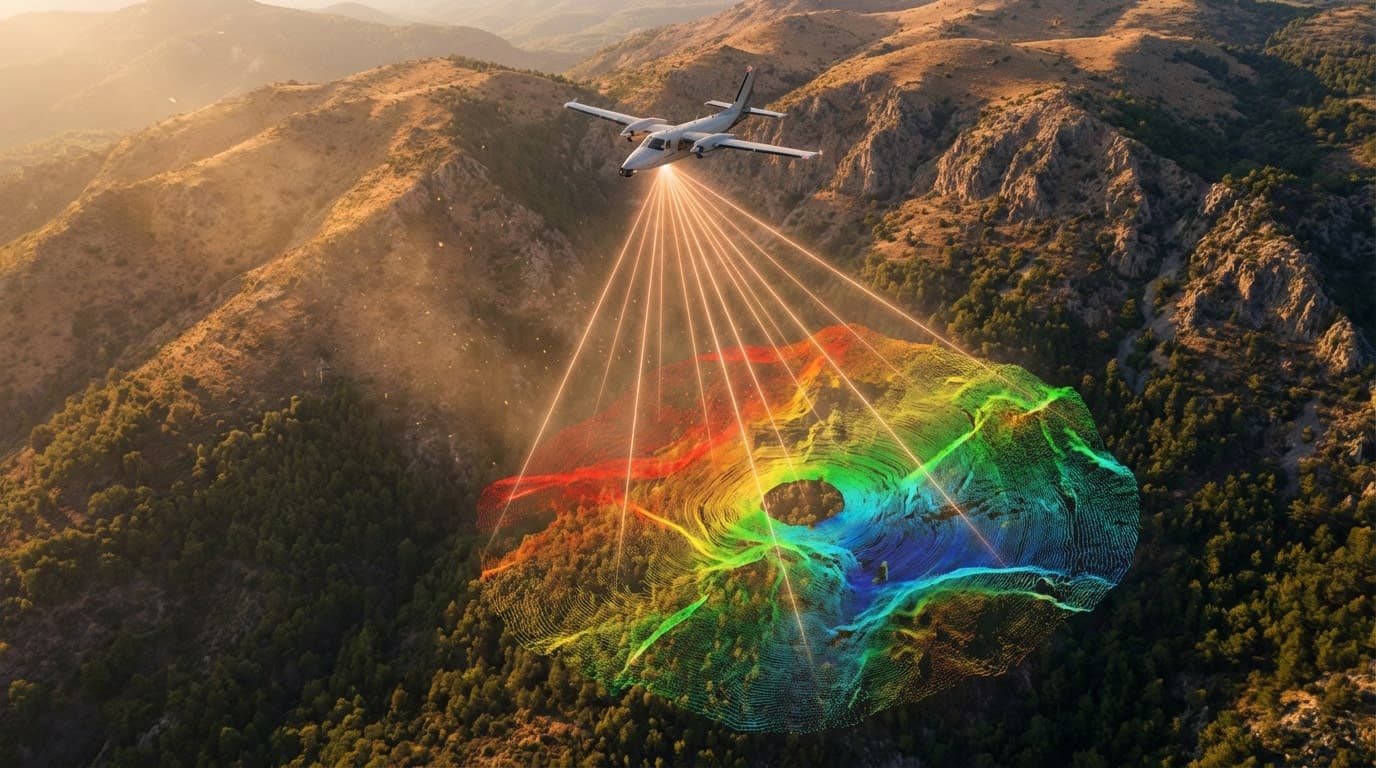
A LiDAR system has three core components: a laser scanner, a GNSS (global navigation satellite system) receiver and an IMU (inertial measurement unit). The system is mounted on an aircraft, helicopter or drone.
The scanner emits hundreds of thousands of laser pulses per second. When those pulses strike the earth they reflect back to the sensor. Distance is computed from the round-trip light time. GNSS captures position and IMU captures orientation. Combining the three yields the XYZ coordinate of each pulse at centimeter accuracy.
Point Clouds and Derived Products
A LiDAR survey produces a 3D point cloud of millions of points. Classification algorithms split the raw data into ground, buildings, vegetation and water.
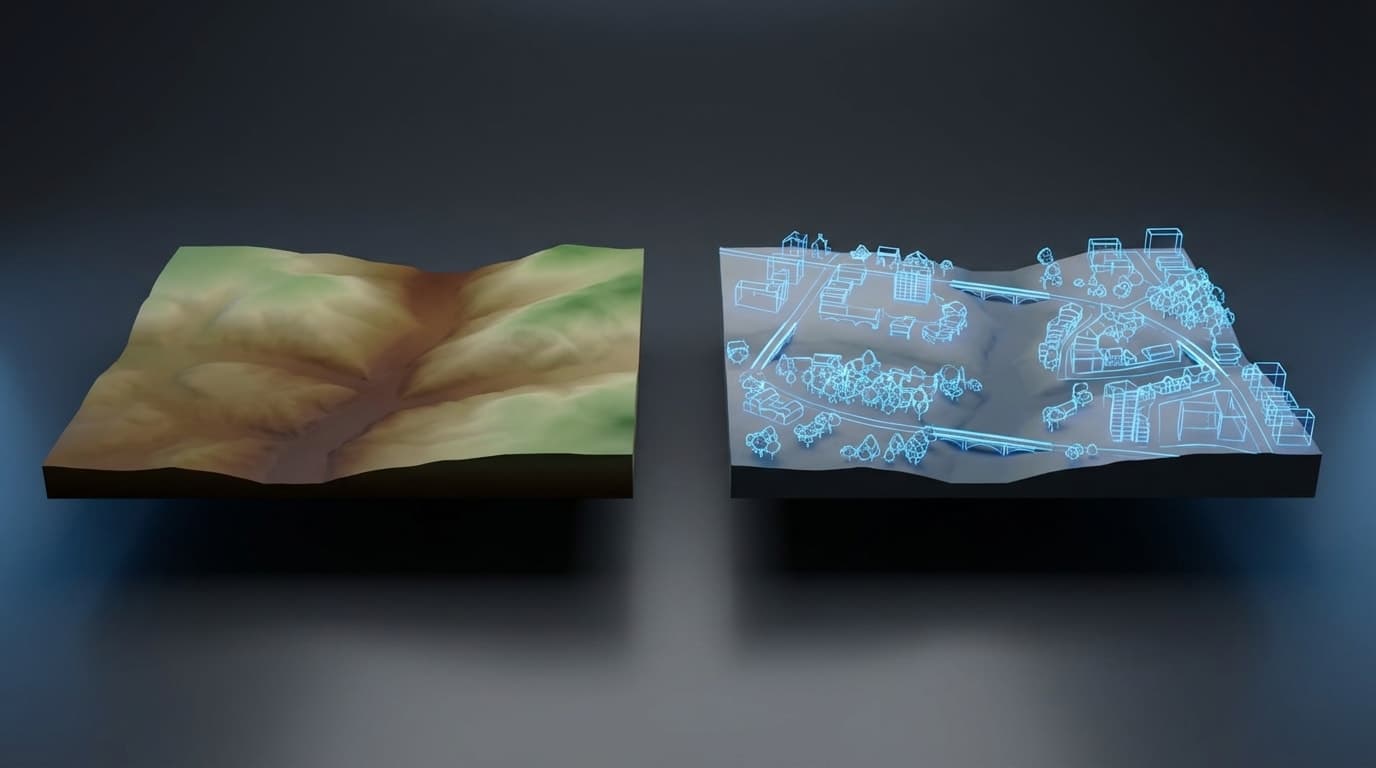
The classified point cloud yields a digital terrain model (DTM) — the bare-earth model. A surface model including all objects is called a digital surface model (DSM). The difference between them reveals useful information such as building heights and tree heights.
Difference From Photogrammetry
Photogrammetry derives 3D information from overlapping photos, while LiDAR measures distance directly. The key distinction is that LiDAR can measure the ground beneath vegetation. In forested areas, laser pulses penetrate the canopy and reach the ground, exposing the true topography — something photogrammetry physically cannot achieve.
Use Cases
- Mapping and cadastre: digital map production, base maps
- Energy sector: transmission corridor scanning, wind/solar site analysis
- Transport: road and railway route planning, tunnel projects
- Forestry: tree height and volume, forest inventory
- Mining: open-pit volume calculation, slope stability analysis
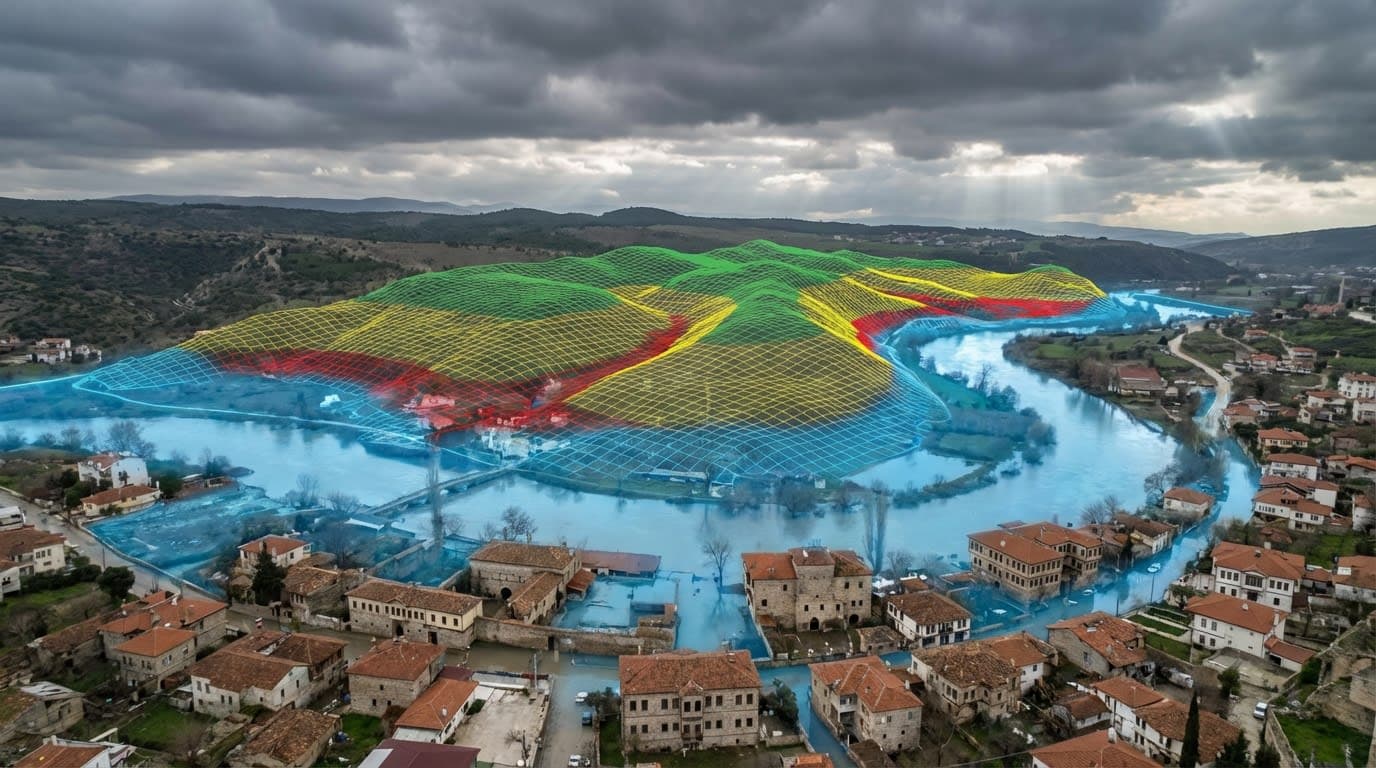
- Flood management: streambed cross-sections, watershed analysis
- Urban planning: 3D building models, shadow analysis
Verigo's LiDAR Capacity
Verigo Digital Engineering offers end-to-end service on aerial LiDAR projects. Flight planning, data capture, point cloud processing, classification and derived product generation are all handled in-house.